
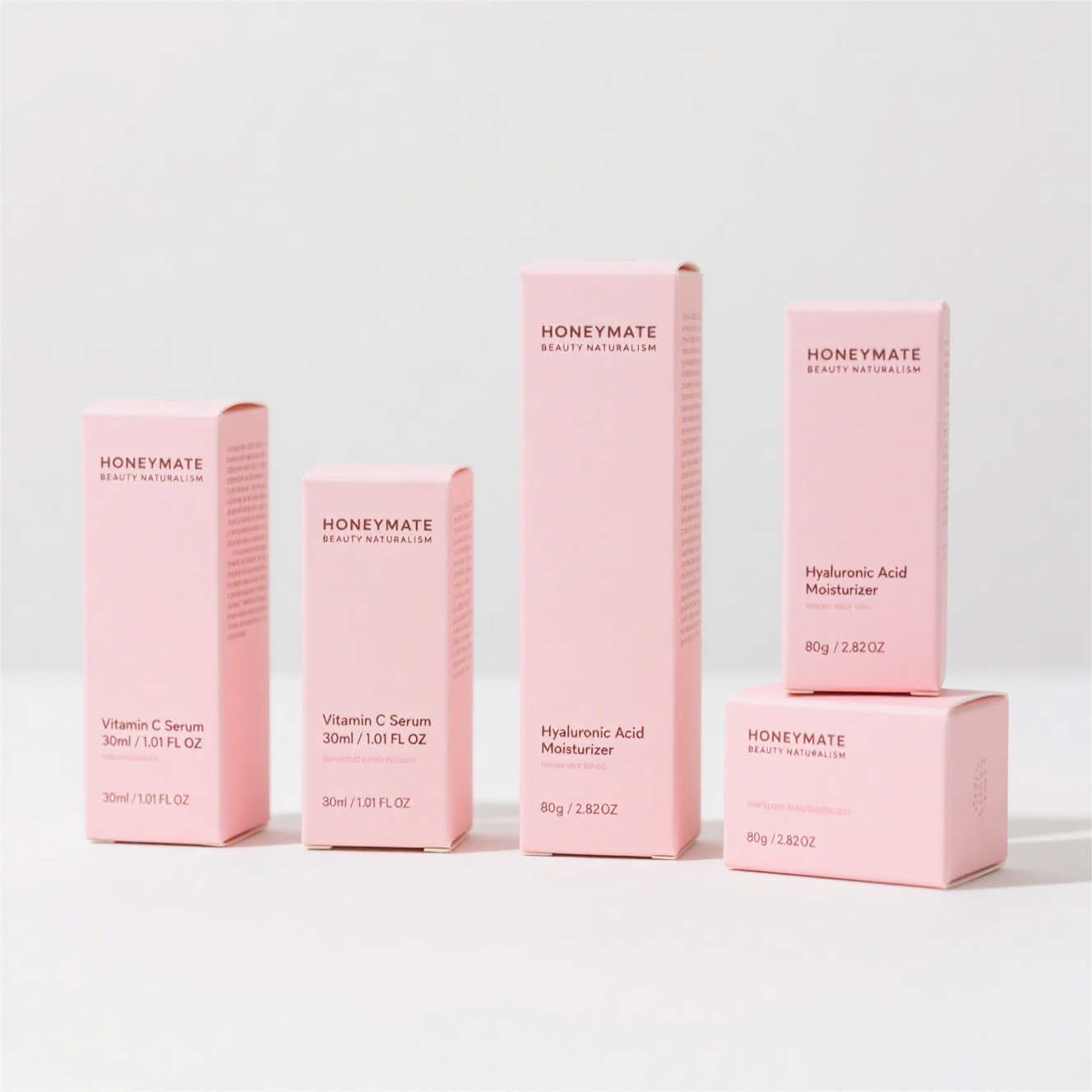
Choosing cosmetic packaging boxes is a product-development decision, not simply a graphic-design task. The right format must protect the formula and primary container, communicate positioning, survive distribution and fit the retail or e-commerce channel. This buyer’s guide compares structures, materials, inserts, printing and sourcing considerations so beauty teams can prepare a clear packaging specification.
Start with the product, not the box style
Before selecting a magnetic box, folding carton or drawer box, document the product that will sit inside it. Record the jar, bottle, tube or compact dimensions, weight, material and closure type. Note any fragile parts, pumps, droppers or glass surfaces. A package that looks impressive on a screen may fail if the product moves, rubs against a printed surface or places too much pressure on a delicate component during transport.
Also define how the customer will receive the product. A folding carton used on a retail shelf has different requirements from a public-relations kit shipped by courier. E-commerce packaging needs protection and efficient outer-carton packing, while a luxury gift set may prioritize a slower reveal and a substantial feel. Tell the supplier whether the box is primary retail packaging, a gift presentation box, a subscription set or a shipping-ready kit.
Choose the right cosmetic box structure
Folding carton structures are widely used for skincare bottles, tubes, makeup and small beauty tools because they are lightweight, printable and efficient to ship flat. A printed perfume folding carton shows how artwork and metallic detail can support a compact fragrance format. Straight-tuck, reverse-tuck, auto-lock and sleeve structures balance assembly, strength and presentation differently. Rigid box formats suit premium sets and high-value launches where the package is part of the product experience.
Do not choose structure by appearance alone. Ask how the box will be assembled, filled and closed. A design that requires several manual steps can increase labor cost. If products are packed in another country, request an assembly video and flat samples. For sets containing several items, make sure every product can be removed without excessive force and returned neatly. The opening direction, finger notches, ribbons and insert depth should be reviewed during sampling. For a broader structure decision, compare rigid boxes and folding cartons from a buyer’s perspective.
Compare paperboard and wrapping materials
The material specification affects stiffness, print quality, cost and recycling considerations. Folding cartons commonly use coated folding box board or solid bleached paperboard. Kraft board can create a natural appearance but may change printed colors because the substrate is not white. Rigid boxes normally use greyboard wrapped with printed art paper, specialty paper or dyed paper. Board thickness should be selected according to the box size and the weight it carries, rather than copied from an unrelated sample.
Ask the manufacturer to identify the material, thickness and surface treatment in the quotation. Terms such as premium paper are too vague for comparison. If recycled content, FSC-certified paper or plastic-free construction is important, make it a written requirement and confirm availability for the specific production location. Sustainability claims should be based on documented materials and realistic end-of-life conditions, not only on a kraft-paper appearance.
Design an insert that protects and presents
Cosmetic packaging inserts control movement and organize the unboxing sequence. Paperboard inserts are suitable for many bottles and jars and can support a paper-led design. Molded pulp may work for some shapes and sustainability goals, while foam and EVA provide precise cushioning for glass or unusually shaped products. The best option depends on weight, fragility, box depth, budget and desired appearance. A single insert material is not automatically correct for every cosmetic set.
Provide physical products or accurate three-dimensional dimensions whenever possible. Include caps, pumps and any protective bags in the fit calculation. A perfume rigid box with a fitted insert illustrates how the cavity and removal space work together. During sample review, gently shake the packed box to identify movement and confirm the customer can remove each item comfortably. The packaging box inserts guide explains how cavity fit, insert depth and removal access should be reviewed across common insert materials.
Plan printing and finishing around the brand system
CMYK printing is practical for photography and multi-color graphics, while Pantone references help control important brand colors. Foil stamping adds metallic or pigmented detail; embossing and debossing create texture; spot UV introduces selective gloss. Matte, gloss and soft-touch lamination change both appearance and resistance to handling. Every extra process adds cost, setup and potential variation, so use finishes to reinforce hierarchy rather than applying all of them at once.
Create artwork only after the supplier provides the correct dieline. Keep logos and mandatory text away from folds, glue areas and cut edges. Request a digital proof for content and a physical sample when color, texture or structure is critical. Screen colors are not reliable production standards. For coordinated skincare ranges, establish common rules for logo position, typography and color coding so future product extensions can use the same packaging system.
Understand MOQ, sampling and production cost
Custom packaging cost includes material, printing plates or setup, cutting tools, finishing, assembly, inserts and packing. Low order quantities spread setup costs across fewer pieces, so the unit price is usually higher. Ask suppliers to quote at two or three quantity levels instead of requesting only one number. This helps the team see whether a slightly larger order meaningfully improves unit economics or simply creates excess inventory.
Sampling is a separate stage. A plain structural sample can confirm size and fit, while a fully printed sample is needed to evaluate brand colors and finishes. Confirm whether the sample is handmade or produced on mass-production equipment, because small differences may remain. Include sample cost, courier cost and revision allowance in the development budget. For a detailed sourcing perspective, read our low MOQ custom packaging supplier guide.
Evaluate manufacturing and quality control
A useful supplier review goes beyond a portfolio of attractive photographs. Ask which operations are completed in-house and which are subcontracted. Confirm experience with the proposed structure, insert and finish. Review how artwork revisions, material approvals and samples are recorded. A clear specification should identify dimensions, tolerances where needed, materials, print references, finishing positions, packing method and acceptable appearance standards.
Quality control should happen before, during and after production. Pre-production checks confirm approved files and materials. In-process checks can identify print registration, lamination, cutting, gluing or assembly issues before the full quantity is completed. Final inspection should review quantity, dimensions, function, surface appearance, packing and carton marks. Buyers should define critical defects, such as a box that does not close or an insert that damages the product, separately from minor cosmetic variation.
Prepare for retail, e-commerce and international shipping
Packaging that looks correct at the factory can still fail in distribution. Tell the supplier whether finished boxes will be shipped assembled or flat, how they will be packed into export cartons, and whether products are inserted before international transport. Rigid boxes consume more freight volume than folding cartons, so carton dimensions matter. Protective tissue, bags, dividers or corner protection may be required for delicate surfaces.
For e-commerce, evaluate the complete system: product, retail box, insert, shipping carton and void fill. A beautiful retail box should not be expected to serve as a courier carton unless it was designed and tested for that purpose. Confirm shipping marks, pallet requirements, destination regulations and the party responsible for freight. Build time for inspection and logistics into the launch schedule rather than treating shipping as a final administrative step.
Create a quotation brief suppliers can answer accurately
A strong request for quotation should include the product type, closed box dimensions, product dimensions and weight, box structure, material preference, insert requirement, artwork, printing and finishing, order quantity, destination, packing expectations and target delivery date. State which items are fixed and where you are open to alternatives. If the design is still early, ask the supplier to quote a recommended specification and explain the assumptions.
Compare quotations line by line. A lower price may reflect thinner board, different paper, fewer finishes, simpler packing or an excluded insert. Ask for clarification instead of assuming all suppliers interpreted the brief in the same way. Keep one approved specification as the source of truth. Review the broader packaging boxes range, including a black magnetic cosmetic gift box, when comparing structures for a beauty project.
Related MCH resources
Frequently Asked Questions
What is the best box material for cosmetic packaging?
Folding box board works well for many retail cartons, while rigid greyboard is common for premium sets. The correct material depends on product weight, structure, finish, budget and shipping method.
Should cosmetic boxes use paperboard or foam inserts?
Paperboard is suitable for many products and supports a paper-led design. Foam or EVA may provide more precise cushioning for fragile glass or complex shapes. Product testing should guide the choice.
How early should a brand start packaging development?
Begin before final launch artwork is due. Structure, sampling, revisions, production and shipping all require time, and complex inserts or finishes increase the development schedule.
Can small cosmetic brands order custom boxes?
Yes, but low quantities usually have a higher unit cost. Standard materials, simpler structures and limited finishes can make a lower-MOQ project more practical.