
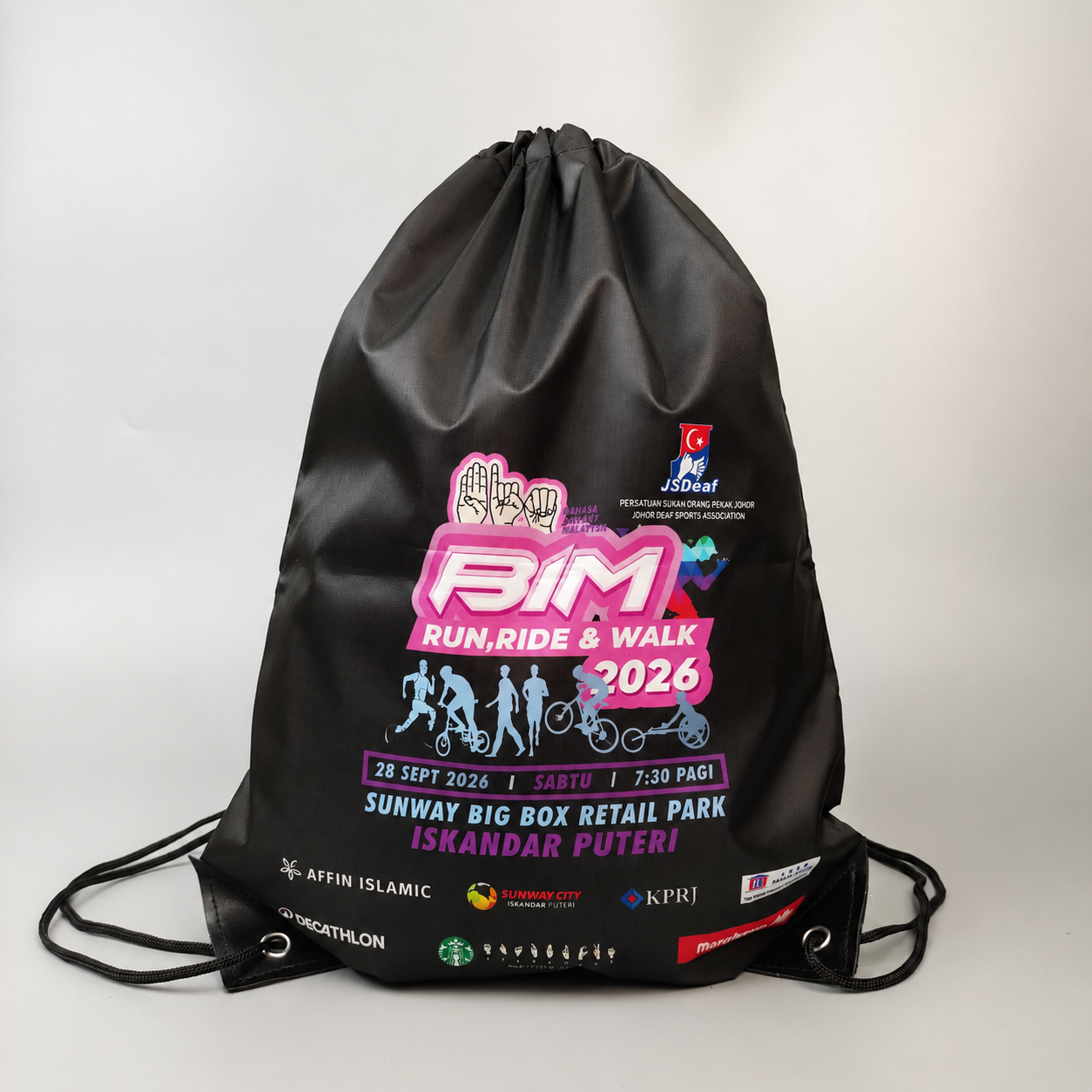
Choosing a polyester drawstring backpack requires more than selecting a color and placing a logo. Fabric specification, cord construction, reinforcement, print method, finished capacity and distribution plan all affect whether the bag fits an event, sports or promotional program. This guide helps B2B buyers compare those decisions and prepare a clearer RFQ without replacing the project-specific sample and specification process.
Begin With the Program, Recipient and Packed Contents
Start by defining what the backpack must do. A marathon participant bag may hold a race number, shirt and small personal items for a limited period, while a school activity bag may be carried repeatedly and loaded differently. A music-festival merchandise bag, corporate giveaway and sports-club kit also create different expectations for artwork, carrying comfort, packing speed and presentation. List the recipient, use setting, distribution method and desired period of use before choosing a reference product.
Record everything that will be packed, including the largest item dimensions, approximate combined weight and preferred orientation. Note whether staff will pre-pack the bags or distribute them empty. This information guides finished width and height, cord arrangement, corner reinforcement and any pocket requirement. The broader Custom Bags category provides several material and structure families, while the Polyester Drawstring Backpacks range shows the current real examples relevant to this guide.
Specify Polyester Material Instead of Choosing by Photograph
Polyester drawstring backpacks may look similar online while using different yarn, weave, coating, hand feel and fabric weight. Color, opacity, flexibility and surface texture can also change how a print appears. Ask the supplier to identify the proposed material in the quotation and sample rather than accepting a generic description such as polyester bag. A photograph cannot confirm the fabric specification, and one product example should not be treated as the default for another application.
The current Polyester Drawstring Backpacks type page identifies 210D, 420D and 600D polyester among material options. Denier describes yarn linear density; it does not by itself prove finished strength, water resistance or suitability for a particular load. Buyers should not copy 210D or 420D from another project without reviewing the actual construction. Confirm the quoted fabric, coating or finish, color and sample for the intended program, and require any formal performance expectation to be evaluated separately for the complete bag.
Color approval should identify both the reference and the viewing conditions. A digital screen, a fabric swatch and a finished printed panel can appear different, particularly when the base fabric has gloss or texture. Record whether the approval applies to stock fabric, a named color reference or a specific sampled lot. If consistency across several deliveries matters, ask how material identification and approved color references will be carried into later production rather than relying on an informal description such as royal blue.
Compare the real fabric and finished bag together
A loose swatch helps with color and surface review, but it does not show seam behavior, cord-channel movement or corner construction. Approve the material as part of a representative finished sample.
Understand the Lightweight Drawstring Construction
The basic structure uses cords to close the top opening and act as shoulder straps. Pulling the cords gathers the upper edge; loading the bag and wearing it transfers force through the cords, eyelets or corner patches and surrounding seams. Buyers should review cord diameter, material, color, knotting, channel width and how smoothly the opening closes. The bag should be checked while filled with the intended contents rather than assessed only when it is empty and flat.
Lower-corner construction deserves particular attention because it anchors the cords. The black backpack with a white logo shows a high-contrast printed body with reinforced lower corners, while the exact cord and patch details still need to be written into the project specification. Ask for clear front, back, inside and corner photographs with the sample. Confirm stitching, edge finishing and whether hardware contacts or marks the fabric during packing and use.
Choose Screen Printing for Suitable Logo-Led Artwork
Screen printing is commonly evaluated for solid-color logos and relatively simple artwork on suitable polyester surfaces. The number of colors, image detail, print area, fabric color and coating can affect the proposed process and result. A blue screen-printed drawstring backpack illustrates a clear single-color branding direction. It is a product example, not a promise that every fabric and graphic will reproduce identically.
Provide vector artwork where possible and specify final print dimensions and position from stable seams. Very small text, fine lines and artwork crossing folds or cord channels may need adjustment. Ask how the print will appear on the selected color and whether an underbase or another preparation is proposed. Review a printed sample or agreed print reference before approving the production appearance, especially when a corporate color or high-contrast logo is important.
Use Sublimation or Full-Color Printing When the Design Requires It
Sublimation is relevant to selected polyester constructions when detailed, multi-color or broad-coverage graphics are required. Artwork setup, fabric color and the printable panels influence the result. A full-color sublimation drawstring backpack demonstrates a large graphic treatment, while an all-over logo polyester backpack represents a repeat-pattern direction. Buyers should distinguish panel printing, broad front coverage and a true repeated layout when preparing artwork.
Full color is a visual requirement, not a complete process specification. Ask the supplier to identify the proposed printing method for the selected fabric and construction. Confirm color references, artwork scale, seam allowances, panel alignment and which areas cannot be printed. A digital mockup can check content and placement, but it does not replace a physical sample when color, surface or registration is important. Avoid describing sublimation as universally suitable for every polyester bag or every artwork file.
Control artwork across seams and production panels
If graphics approach an edge, fold or reinforced corner, mark the expected crop and alignment on the production artwork. Keep critical logos and text within an agreed safe area.
Match Reinforcement, Cords, Pockets and Straps to Use
Reinforcement should respond to the packed contents and carrying pattern. Corner patches, eyelets, seam construction and cord attachment work as a system; adding a visually larger patch does not automatically establish performance. Share the planned contents and any critical use condition, then review the proposed detail in the sample. If a buyer needs formal strength or durability evidence, the requirement and test method must be agreed for that project rather than inferred from a generic product photograph.
Some programs may ask for pockets, alternative straps, reflective components or other features. Each addition changes panels, sewing, packing and artwork space. Decide whether a pocket has a defined purpose and state its usable dimensions, closure and placement. A standard drawstring backpack is different from a structured day pack with padded shoulder straps, so do not combine those expectations under one reference name. Keep optional components limited to functions that recipients will actually use.
Plan Size and Capacity From the Actual Kit
Finished size should be based on the contents, not a familiar promotional-bag dimension. Arrange the intended items, determine the required internal width and height, and allow enough clearance for packing without creating excessive empty volume. Wide folders, boxed gifts, bottles and clothing affect the layout differently. Include the closure area in the review because the gathered top reduces usable space near the opening.
Test a sample with the full kit. Open and close it several times, carry it in the intended way and check whether corners, cords or seams distort. For race distribution, a marathon drawstring bag is a useful application reference, but its dimensions should not be copied without matching the participant kit. School and sports teams should also review identification, artwork visibility and how easily recipients can distinguish bags in a group.
Record usable capacity rather than an unsupported load claim
Document the real contents and their arrangement. Do not replace a fit review with a generic kilogram claim unless a defined construction and appropriate project-specific validation support it.
Adapt the Specification to Events, Sports and Promotions
An event bag should support fast distribution and clear campaign visibility. A music festival drawstring bag illustrates artwork-led event merchandise, while a promotional giveaway may favor a simpler logo and compact packing. Define whether the bag is part of a paid merchandise range, participant kit, staff issue or open giveaway because quality expectations, labeling and packing can differ.
Sports and outdoor programs may prioritize visibility and easy identification. A fluorescent promotional drawstring backpack shows a bright color direction, but color alone should not be described as safety equipment or proof of visibility performance. If the program has regulated or safety-related requirements, obtain appropriate professional guidance and specify the required materials or testing independently. For a natural-fabric pouch rather than a wearable event bag, compare Cotton & Jute Drawstring Bags.
Control Large-Volume Sourcing Without Inventing Standard Quantities
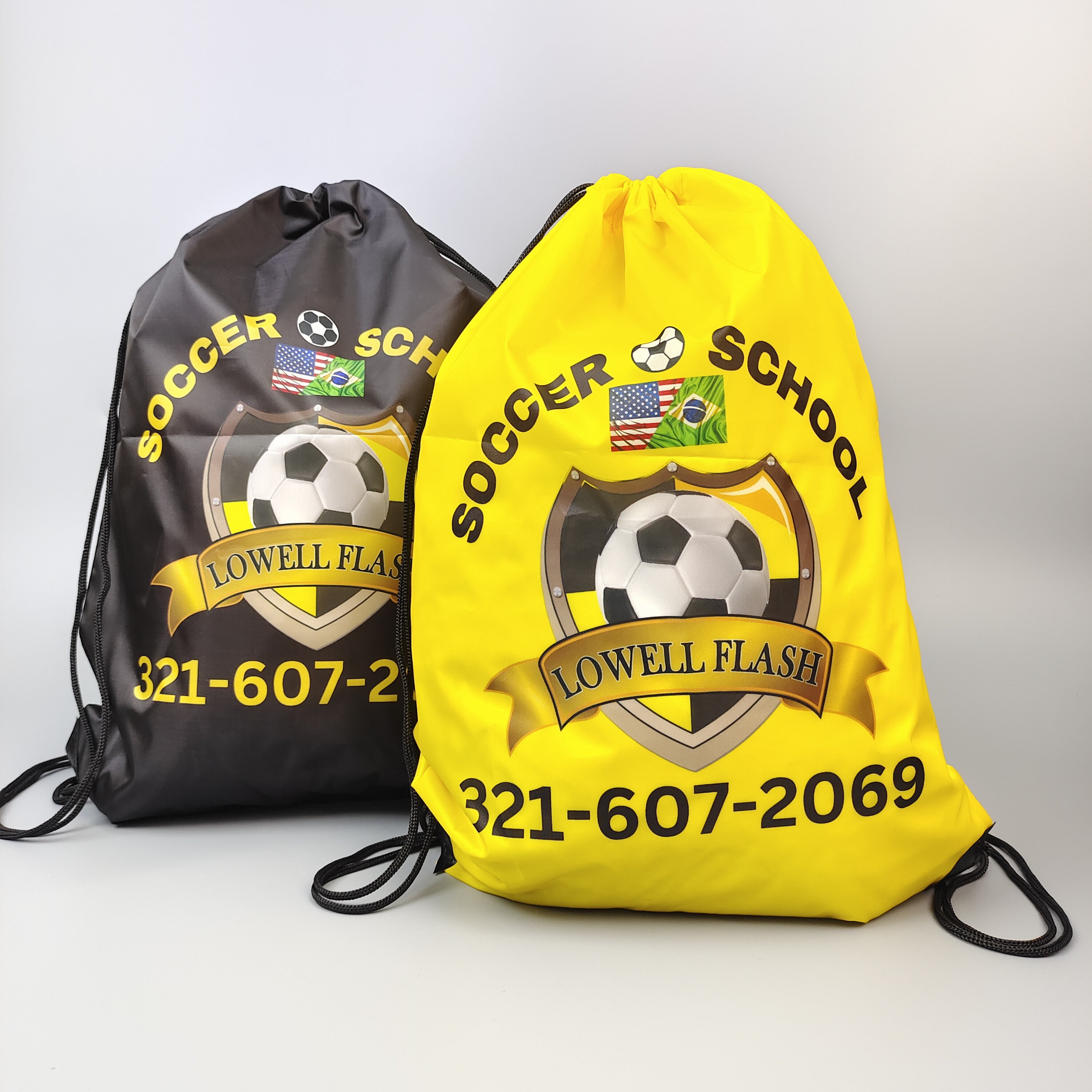
Large distribution programs benefit from disciplined specifications, not an assumed universal production quantity. Freeze the approved fabric, color reference, dimensions, cord, reinforcement, artwork, print position, sewing details and packing method in one controlled document. Identify who can approve changes. If several destinations or event dates are involved, separate production completion from delivery planning and provide a clear allocation list.
Review how bags will be folded, individually packed or bulk packed, counted and labeled for distribution. Artwork versions, sponsor logos and location-specific carton marks can create errors if they are not tracked. Ask suppliers to state any material or accessory assumption and to flag substitutions before use. Commercial terms such as MOQ, price, lead time and available capacity must come from the current quotation; this guide does not provide standard figures or imply a capability for every discussed option.
When one order serves several venues, create a packing matrix that links each artwork version to its destination, carton marking and required distribution pack. Confirm whether cartons contain one version only or a controlled mix. This planning helps receiving teams identify stock without opening every carton and reduces the risk that a local event receives the wrong sponsor artwork. Keep the allocation document under the same revision control as the bag specification.
Prepare a Polyester Drawstring Backpack RFQ
A useful RFQ should describe the application, recipient, destination, requested quotation quantity, intended contents, finished dimensions, polyester specification if known, bag color, cord and corner construction, pockets or added features, artwork, printing method preference and packing requirements. Attach reference photographs, but label which features are mandatory and which are only visual direction. If the material is undecided, ask the supplier to identify and explain the proposed option rather than leaving polyester undefined.
Request a sample review plan that covers fabric, color, dimensions, closure movement, cord comfort, corner detail, artwork, seams and packing. Compare quotations against the same specification and list exclusions. Buyers planning conferences or corporate distributions can use the corporate event bag guide to review kit planning and delivery questions that apply across bag materials.
During approval, separate structural comments from artwork comments so neither is lost. Record the sample identifier, review date, requested correction and final decision. If the sample uses substitute fabric or a provisional print process, label that limitation clearly and require the production specification to identify the final proposal. A signed physical sample is most useful when it is supported by written dimensions, materials and construction details rather than treated as the only record.
- Program, recipient, destination and requested quotation quantity
- Contents, approximate combined weight and packing orientation
- Finished width and height plus required usable opening
- Proposed polyester fabric, color and surface finish
- Cord material, color, channel and lower-corner construction
- Pocket, lining, reflective or other functional requirements
- Artwork files, print dimensions, colors and proposed method
- Sample approval criteria, packing, labels and allocation plan
Choose by Function and Confirm the Complete Sample
The right polyester drawstring backpack aligns material, construction, artwork and packing with a real program. Screen printing may suit a clear logo-led direction, while sublimation can support selected detailed or broad-coverage graphics. Neither method, fabric denier nor reference photograph replaces a complete project specification.
Start with the contents and user, shortlist only relevant structures, and review the proposed material as a finished sample. Document every approved element before production so procurement, marketing and the supplier evaluate the same bag.
Related MCH resources
Frequently Asked Questions
What should buyers provide before requesting a polyester drawstring backpack quote?
Provide the application, quotation quantity, destination, contents, finished size, preferred fabric and color, cords, reinforcement, pockets, artwork, print requirements and packing method.
Is 210D or 420D polyester always better for a drawstring backpack?
No. Denier is only one material descriptor and does not prove the performance of the complete bag. Review the proposed fabric, construction and sample against the intended contents.
Should a logo use screen printing or sublimation?
Screen printing can suit selected solid-color logo designs, while sublimation may suit selected detailed or broad-coverage graphics on compatible polyester. Confirm the method from the actual fabric and artwork.
How should reinforcement be checked?
Review the cords, channels, eyelets or corner patches, seams and packed contents together in a representative sample. Any formal performance requirement needs a defined project-specific validation method.
How do buyers choose the correct backpack size?
Measure the intended kit, allow practical packing clearance and review the usable opening and gathered closure. Confirm fit by loading and carrying a sample with the real contents.