
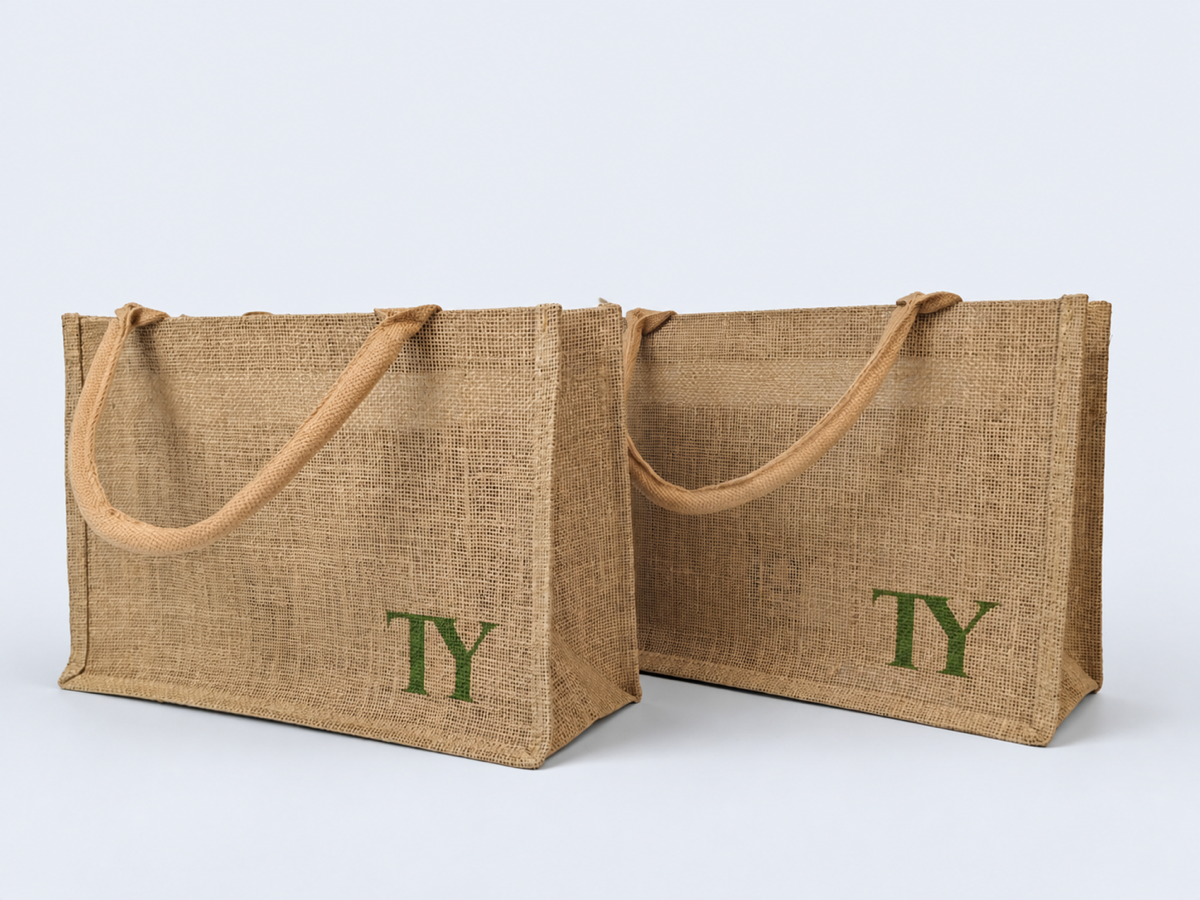
Choosing a jute bag is not simply a matter of selecting a natural-looking material and adding a logo. The weave, bag structure, gusset, handles, lining or lamination, printable panels and intended contents all influence how the finished bag looks and functions. This guide helps B2B buyers compare those decisions for retail packaging, gifts and promotional programs before preparing an RFQ.
Start With the Product, User and Distribution Setting
Begin with what the bag must carry and where it will be used. A compact bag holding a boxed beauty set has different requirements from a shopping tote carrying several retail products. A conference giveaway may prioritize an open top and fast packing, while a gift bag may need a closure or a more controlled presentation. Write down the contents, finished product dimensions, approximate combined weight, distribution method and expected carrying distance before choosing a reference style.
The wider custom bags family includes canvas, jute, drawstring and polyester constructions. Jute is often considered when visible natural texture is central to the presentation, but that texture does not determine the correct structure by itself. Buyers should compare function first, then decide whether the visual character of jute supports the brand and use case. This information-led approach keeps the article separate from a transactional product search and gives suppliers a more useful project brief.
Understand Jute Material and Natural Variation
Jute is a plant-based bast fiber woven into fabrics with a visibly coarse texture. The appearance varies with fiber, yarn, weave and finishing. Natural shade, slubs and small irregularities are part of the material character, so a physical sample is more useful than a screen image when the buyer needs to approve tone and surface. Do not assume that every jute fabric has the same weight, openness or stiffness simply because two bags look similar in photographs.
Ask the supplier to identify the proposed fabric and show the actual weave direction for the project. A more open weave can feel rustic and reveal an internal layer, while a tighter construction may present artwork differently. Edge binding, seams and folded areas also affect the visible texture. If color uniformity or a smooth printing surface is critical, discuss whether a canvas panel or another bag material may better support the design rather than expecting natural jute to behave like coated paper or tightly woven cotton.
Review material in the finished construction
A loose fabric swatch does not show how the material behaves at a gusset, reinforced top edge or handle attachment. Review both the material sample and a representative sewn bag before approving the specification.
Choose the Bag Structure and Gusset Around Capacity
Flat bags suit thin products and simple giveaways, but they provide limited depth. A bottom gusset lets the base open, and side-and-bottom gussets create a more defined internal volume for boxes, jars or multi-item kits. A natural jute shopping bag with a wide gusset illustrates how depth changes usable capacity and standing presentation. The gusset should be measured against the real contents rather than selected from a photograph.
Structure also determines how the bag is packed and stored. A wide gusset can improve capacity but adds fabric, seams and folded volume. A firm rectangular form may look organized at retail yet require more carton space than a flexible flat tote. Confirm whether the bag needs to stand while filled, whether it will be delivered flat and whether staff can open it quickly during packing. A base insert may be considered in some projects, but its material and suitability must be confirmed for the actual requirement rather than assumed from a generic design.
Measure usable space, not only outside dimensions
Seams, gusset folds, lining and closures can reduce usable internal space. Test the intended products in a sample and record the required clearance for loading and removal.
Match Handle Options to Carrying and Presentation
Handle length determines whether the bag is carried by hand or over the shoulder. Width and material influence comfort, while the attachment area affects how the load is distributed into the bag body. Buyers should specify handle drop, width, color and construction instead of writing only short or long handles. Check whether the handles remain upright for display, fold into the opening for packing or interfere with a closure.
For larger retail or event programs, use the intended contents to review handle placement and reinforcement. The large jute tote bag provides a useful example of long handles combined with a larger body, but it does not establish a standard capacity for other projects. No general carrying figure should be copied into an RFQ without a confirmed construction and project-specific validation. Ask for the proposed sewing detail and test the approved sample with the real packed set.
Review the top edge and closure at the same time as the handles. An open tote supports quick loading, while a button, tie or zipper may help control contents or create a more finished gift presentation. The closure must align with the handle spacing and should remain easy to operate when the bag is full. Top-edge binding can add visual definition and cover cut fabric, but its width, color, joining point and stitching should be approved. These details are highly visible when the recipient looks into the bag, so they belong in the construction drawing rather than being left to a generic reference image.
Decide Whether Lamination or Lining Is Needed
An internal lamination may reduce fiber shedding, add body and create a more contained interior. A lining can change the appearance and help separate products from the coarse inner surface. These additions also change flexibility, sewing, cost, packing volume and the way the bag feels. They should solve a defined requirement rather than be added automatically because another sample includes them.
Ask whether the quoted material is laminated, lined or unlined and request a cut edge or interior view. Confirm the color and visible finish of the inside, especially when the bag holds light textiles or presentation boxes. If moisture resistance, food contact or another regulated function matters, obtain project-specific material information and appropriate professional review. Do not infer certifications, recyclability or environmental performance from the natural appearance of jute or from the presence or absence of lamination.
Use Canvas Panels and Pockets for Function or Print Control
Canvas can be combined with jute to create a smoother artwork area, visual contrast or a functional pocket. A jute bag with a contrasting canvas pocket shows how the added panel can organize small items while changing the front layout. Specify the pocket dimensions, opening, placement and intended contents; a decorative pocket and a functional pocket require different decisions.
A jute tote with a printable canvas panel uses a larger smooth area for artwork while retaining natural jute around the structure. Buyers should confirm panel size, seam position, canvas color, print area and alignment. Mixed materials may react differently during packing and use, so review puckering, edge alignment and color contrast on the sample. If a fully smooth textile surface is more important than jute texture, compare the canvas tote bag range before finalizing the material direction.
Select Printing by Artwork and Surface
Simple solid-color artwork is often evaluated for direct printing on suitable jute surfaces. The open weave can break fine lines and small text, so artwork size, ink coverage and contrast need practical review. A single-color printed jute tote illustrates a clear logo-led direction where print position and legibility are more important than reproducing photographic detail.
Detailed or multi-color designs may be considered through a suitable transfer process or by printing on an added canvas area. The heat-transfer printed jute tote bag is a real example of a more colorful artwork approach. The final method should be confirmed from the proposed fabric, artwork, quantity and desired surface feel. Request a printed sample or strike-off when color, detail or adhesion is important, and avoid treating a visual example as proof that every graphic can use the same process.
Provide vector artwork where possible and mark the required print width, height and reference position from stable seams. Ask whether the logo crosses a fold or gusset when packed. Natural fibers and weave variation can affect the appearance of individual impressions, so agree on a realistic approval standard using the actual proposed material.
Match the Specification to Retail, Gift or Promotional Use
Retail shopping bags need efficient loading, comfortable handles and proportions that suit the merchandise. Gift packaging may prioritize a controlled opening, coordinated lining or a structured silhouette. Promotional bags often require a visible logo, practical reuse and efficient packing for distribution. The same photograph can inspire all three applications, but each requires a different specification and approval checklist.
For small gifts or event items, avoid oversizing the bag solely to make the logo larger. Excess internal space can let products shift and can increase material and shipping volume. For multi-item sets, lay out the contents and decide whether they remain loose, use tissue or arrive inside another box. Buyers planning corporate or event distribution can also review the corporate event bag planning guide for questions about contents, carrying, artwork control and packing operations that apply across fabric bag types.
Confirm Size, Capacity and Sample Fit
Define finished width, height and gusset dimensions, and state whether measurements refer to the external bag or required usable space. Include the largest product dimensions and explain the preferred orientation. For bottles or boxes, account for corners and the clearance needed to load the bag without catching the lining or seams. A scaled drawing helps prevent different suppliers from interpreting the same nominal size in different ways.
Review a sample with the complete contents. Load and unload it several times, carry it as intended and observe whether the base distorts, handles twist or products press against a closure. Check how the empty bag folds into the shipping carton and whether strong creases affect presentation. Sampling should confirm construction and fit before artwork approval becomes the only focus. Any formal strength or performance requirement must be defined and validated for the actual product rather than inferred from this guide.
Record what the approved sample represents
Keep the approved dimensions, fabric, weave, handle, gusset, lamination or lining, print method and packing method together. Photographs alone are not a complete production specification.
Prepare a Clear Jute Bag RFQ
A useful RFQ allows suppliers to quote the same bag rather than several loosely similar options. State the application, destination, quantity for quotation, finished dimensions, contents, preferred jute appearance, gusset, handles, closure, lamination or lining, mixed-material panels, artwork and packing method. Attach product dimensions and reference images, but label which details are mandatory and which are open to recommendation.
Ask each supplier to identify assumptions. If the proposed weave, handle or print method differs from the reference, the quotation should say so. Confirm the sampling stage and what will be checked with real contents. Commercial information such as MOQ, price and lead time must come from the live specification and quotation; this guide does not provide standard figures or imply that every discussed construction is available for every order.
Use the Jute Bags product type page to review the current real product examples, then narrow the brief by function instead of collecting unrelated photographs. A focused RFQ reduces ambiguity and makes material, construction and printing alternatives easier to compare.
- Application, destination and quotation quantity
- Finished bag width, height and gusset dimensions
- Contents, orientation and approximate combined weight
- Jute weave, color and required visual character
- Handle material, width, drop, color and attachment
- Lamination, lining, base support or closure requirements
- Canvas panel or pocket dimensions and function
- Artwork files, print size, colors and preferred method
- Sample review criteria and packing configuration
Choose by Function, Then Approve the Complete Bag
The most suitable jute bag is the one whose material, structure and presentation fit the real product and distribution setting. Natural texture can support a distinctive retail or gift direction, but gussets, handles, internal finishing and artwork must still be engineered as a complete construction.
Start with contents and use, compare only relevant structures, and approve a sample that represents the proposed material and sewing details. Document the result in one controlled specification before production.
Related MCH resources
Frequently Asked Questions
What information should a buyer provide for a custom jute bag quotation?
Provide the application, quantity for quotation, destination, finished dimensions, contents, gusset, handles, lining or lamination, closure, artwork, print requirements and packing method.
Does every jute shopping bag need a gusset?
No. Flat bags can suit thin or lightweight contents, while bottom or side gussets add usable depth for boxes and multi-item sets. The structure should be checked with the real contents.
Why use a canvas panel on a jute bag?
A canvas panel can provide a smoother print area, visual contrast or a functional pocket. Its size, material, seams and artwork position should be confirmed in the sample.
Should a jute bag be laminated?
Lamination may add body, reduce fiber shedding or create a more contained interior, but it also changes flexibility and construction. Use it only when it supports a defined project requirement.
How should printed artwork be approved on jute?
Review artwork size, contrast, position and detail on the actual proposed fabric. A printed sample or strike-off is more reliable than judging the result from a digital mockup alone.