
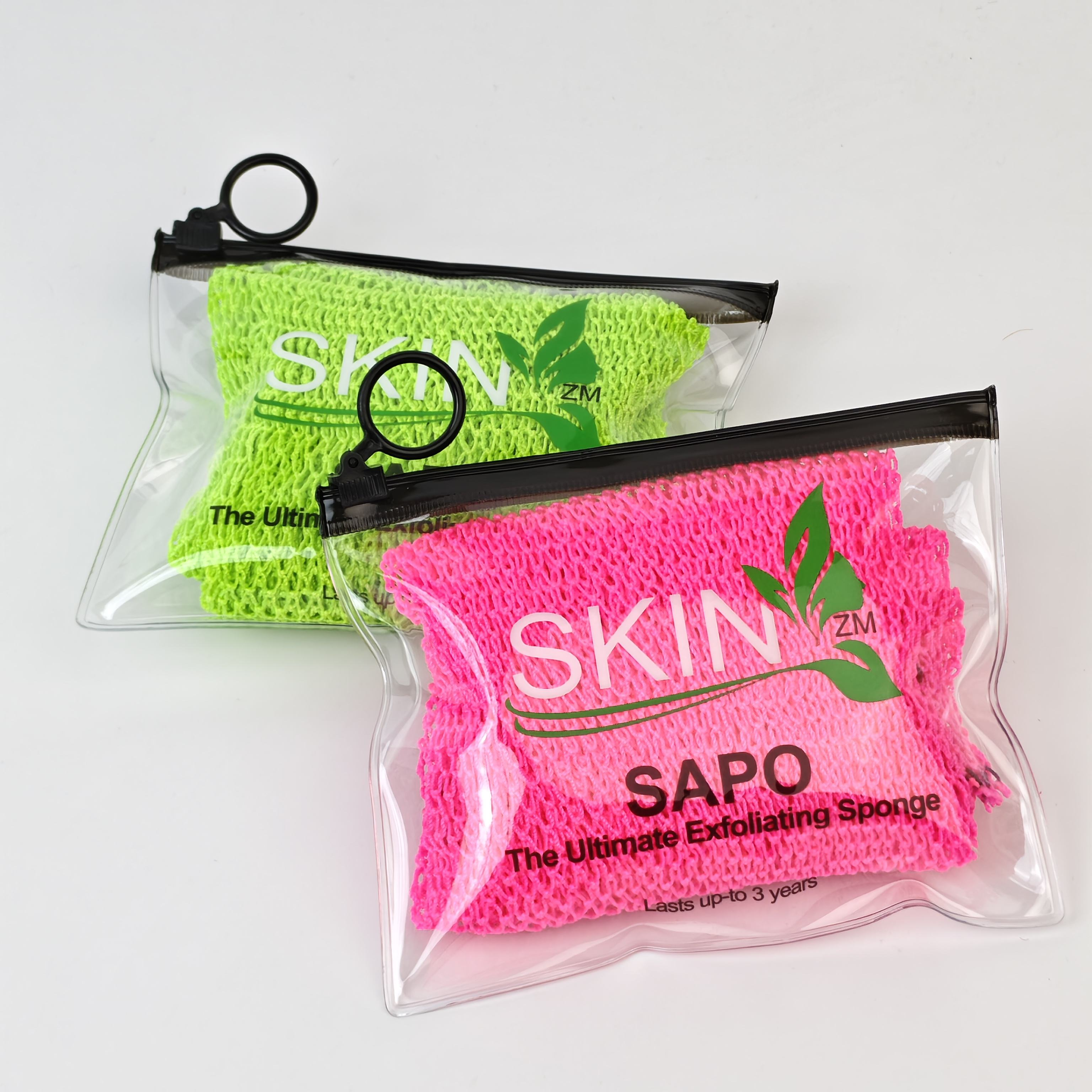
A custom PVC zipper bags bulk order starts with a complete commercial brief, not a request for a generic pouch price. Buyers need to connect the packed product, structure, artwork, quantity, approval process, quality expectations and shipping plan before production. This sourcing guide explains what to send with an RFQ, what to confirm on a sample and how to keep the approved specification consistent through bulk manufacture.
Prepare the Information a Supplier Needs Before Quoting
A useful quotation begins with the commercial situation. State the product, intended market, quotation quantity, number of artwork versions, destination and whether the pouch will be shipped empty or filled. Explain the retail, promotional, travel, cosmetic or kit-packing use. If a launch date matters, share it as planning context while asking the supplier to confirm a project-specific schedule rather than assuming a standard lead time.
Send the finished bag dimensions you are considering, the packed product dimensions and weight, the required opening direction, finish preference, artwork, print coverage, zipper details and packing expectations. Label every unknown clearly. A supplier can propose alternatives when the brief distinguishes fixed requirements from flexible choices; it cannot accurately compare prices when key features remain implicit.
Reference photographs are helpful, but identify exactly what each image represents. One picture may communicate a zipper color, another a gusset and a third a print layout. Do not ask a factory to copy an unmeasured photograph. Use the PVC Packaging category and the PVC Zipper Bags range to shortlist relevant examples, then describe the actual order in writing.
Build the Bag Structure Around the Packed Product
Start with the physical contents. Record the item count, dimensions, weight, orientation, sharp corners and parts that may catch near the closure. Arrange the actual items, photograph the preferred layout and measure the group. A clear dental kit pouch demonstrates how several small components need visible organization and practical access, while a cosmetic bottle set needs more depth and control around rigid containers.
Choose a flat pouch for relatively thin contents and consider a gusset when the packed group requires depth. The frosted bottom-gusset PVC zipper bag is a useful reference for added capacity without assuming its dimensions suit another product. Ask for a dimensioned drawing and confirm the usable opening after zipper stops, seams or sealed edges are considered.
Test filling and removal, not only the visual fit. Packing staff need enough clearance to load efficiently, and customers should not have to force rigid items through the opening. The pouch may support presentation and organization, but transport protection must be evaluated as a complete system with the packed product, any inserts and the outer carton.
Choose Clear, Frosted, Colored or Holographic With a Purpose
Keep the finish decision tied to merchandising. Clear PVC provides direct product visibility; frosted material diffuses the view; colored transparent material changes the appearance of both contents and ink; holographic material introduces a strong iridescent effect. A clear black-logo PVC zipper bag shows a restrained visibility-led direction, while an orange PVC bag with white print shows how substrate color and artwork contrast work together.
For a more decorative program, review the holographic printed PVC zipper bag with the actual artwork and product rather than choosing from an empty swatch. Confirm the proposed finish on the physical sample because photographs, lighting and screens do not establish exact transparency or color.
This article intentionally does not repeat sheet selection and construction fundamentals. Use the PVC Zipper Bag Material and Thickness Guide for detailed comparisons of clear and frosted surfaces, thickness, gussets, zipper construction and edge methods; return here for quotation, approval, QC and order planning.
Define Artwork and Printing Requirements Before Pricing
Provide editable vector artwork when available, plus a PDF reference that shows the intended appearance. Identify fonts, critical brand colors, number of colors, gradients, fine text, metallic effects, white underbase needs and total print coverage. Mark the finished print size and location on the supplier’s dimensioned drawing. Essential text should stay clear of zipper tracks, folds, seams and sealed edges.
Do not select a print process only from an online photograph. Ask the supplier to propose a method for the chosen finish, construction and artwork, and state it in the quotation. A full-color printed clear PVC zipper bag provides a real example of broad graphics over a transparent panel, but its production specification is not automatically appropriate for every design.
Approve content and position in a digital proof, then check color, opacity, registration and surface result on the physical sample. Give every artwork revision a file name or version number. If several designs share one order, list quantities and carton identification by version so production and packing teams are not working from informal email attachments.
Understand How Size, Gussets, Zippers and Handles Affect the Quote
Finished width, height and gusset depth affect material use, layout and packing volume. State whether measurements are internal or external and request a drawing that labels the finished dimensions. A larger nominal pouch does not guarantee a larger usable opening, so the quote and sample should identify both overall size and closure arrangement around the packed product.
Specify the zipper type, tape or profile color, pull style, opening direction and any contrasting trim. Handles, hanging holes, pockets, ring pulls, reinforced areas or sewn components add operations and can change panel layout. Ask suppliers to price the structure you intend to approve, not a simplified flat-pouch assumption. Optional features should solve a handling, display or packing need.
For a cosmetics program, the frosted cosmetic bottle PVC zipper bag is a useful reference for product-specific proportions. Compare quotations only when size, structure, finish, printing, closure and packing match. If a supplier proposes a cost-saving alternative, require the changed specification and commercial effect to be identified separately.
Why MOQ Changes From One PVC Zipper Bag to Another
For custom PVC zipper bags, MOQ can start from 100 pieces. The actual MOQ may vary depending on bag size, material, construction and printing requirements. Finish, zipper components, artwork versions, special trim, packing, supplier capacity and current material sourcing can also affect what can be quoted for a particular order.
A simple clear format with established components and limited artwork may create different production conditions from a holographic gusseted pouch with custom trim and several print versions. This does not justify guessing a number in advance. Send the actual specification and requested quantity, then ask the supplier to explain any constraint and provide a comparable alternative if the requested configuration is not practical.
When reviewing quantity options, separate total order quantity from quantity per design, color or size. Confirm whether setup, sampling, packing and freight are included or listed separately. The goal is not to find the smallest advertised number; it is to compare quotations that describe the same approved bag and the same allocation.
Approve the Sample Against a Written Specification
Review the sample with the real contents and the stakeholders who will authorize production. Check finished dimensions, usable opening, product fit, gusset formation, zipper operation, pull access, seams or seals, surface appearance, transparency, artwork size, print position and packing. Load and remove the contents using the expected process rather than judging an empty pouch on a desk.
Compare the sample with the current drawing and artwork proof. Photograph each requested change and refer to a precise location or dimension. Replace vague comments with measurable or visible corrections. If the sample uses any temporary material, hardware or print method, identify that substitution in writing and obtain confirmation of the production equivalent before approval.
Assign the approved sample a date and reference code, and store the matching specification and artwork versions together. State whether approval is final or conditional. A sample is a control reference only when both buyer and supplier know exactly which physical piece and documents govern bulk production.
Resolve Common Problems Before Bulk Production
Common preventable problems include incomplete dimensions, artwork positioned against a seal, a zipper opening that is too narrow for the contents, insufficient gusset clearance, low print contrast over a colored or transparent panel and inconsistent component descriptions. Another frequent risk is approving a visual mockup while leaving the finish, zipper or packing method undefined.
Freeze the specification only after every comment is closed. Check that the purchase order, quotation, drawing, artwork proof, sample record and packing instruction describe the same version. If the supplier recommends a change after approval, require a written explanation and revised approval reference before production continues. Do not allow an informal message to overwrite the controlled documents.
Use one responsible contact on each side for version control. Confirm quantities by artwork, color and size, plus carton marks and any allocation by destination. These administrative controls are as important as the physical sample when several departments, suppliers or logistics partners are involved.
Plan Bulk Production Quality Control
Quality control should reflect the approved specification and the way the bag will be used. Dimensional checks should cover width, height, gusset and usable opening as applicable. Visual checks should review print location, artwork version, registration, color reference, transparency or frost level, surface marks and overall cleanliness under agreed viewing conditions.
Functional review should include normal zipper opening and closing, pull attachment, edge or seam condition and fit with the intended contents. Sampling frequency, tolerances and acceptance criteria must be agreed for the actual project rather than borrowed from an unrelated article. Any critical function or formal test requirement should be written into the order and supported by an appropriate inspection method.
In-process checks can detect repeated placement, sealing or component issues before the full quantity is finished. Final inspection should also verify counts, artwork and color allocation, individual packing, carton quantity and marks. Record nonconformities with photographs and quantities so disposition decisions are based on evidence rather than broad statements about quality.
Confirm Packing and International Shipping Details
Decide whether the pouches ship flat, folded, individually protected or filled with the customer’s products. Clear, glossy, printed or holographic surfaces may need an approved separation or packing method to manage contact marks. Confirm fold direction so the zipper, artwork and visible panels are not placed under unnecessary pressure during storage and transit.
Ask for pieces per inner pack and export carton, carton dimensions, gross and net weight reporting, carton marks and any pallet requirement. Volume can change materially when gussets, handles, rigid contents or protective packing are added. Obtain project-specific packing data before final freight planning rather than estimating from a flat sample.
Share the destination country, delivery terms under discussion and whether goods go to a warehouse, co-packer or fulfillment center. Confirm which party arranges freight, customs documentation and destination handling. Regulatory, labeling or testing requirements must come from the buyer’s market and be agreed for the specific product; this guide does not claim a certification or compliance status.
Send a Complete RFQ for an Accurate Quotation
An RFQ should let the supplier price one defined scope and identify remaining assumptions. Attach product photographs or samples, a dimensioned layout, artwork and references. If a choice is open, ask for a recommended specification plus an explanation. Use the MCH packaging RFQ form to send the brief after gathering the information below.
- Packed product type, dimensions, weight, quantity and orientation
- Finished bag width, height and gusset, with internal or external dimensions identified
- Clear, frosted, colored or holographic direction and any physical reference
- Zipper, pull, trim, handle, hanging hole or other structural requirements
- Editable artwork, PDF reference, print size, position, colors and version quantities
- Quotation quantity, number of sizes or designs and acceptable alternatives
- Sample type required and the buyer’s approval criteria
- Individual packing, carton, marks, destination and shipping arrangement
Final Buyer Checklist Before Approving Production
Before signing off, confirm that the quotation, purchase order, drawing, artwork proof, approved sample and packing instruction all refer to the same revision. Check product fit, finished and usable dimensions, gusset, material appearance, zipper and trim components, artwork position, print result, quantities by version, QC criteria and export packing. Record every allowed substitution explicitly.
Make sure commercial assumptions are visible: what is included, what remains buyer-supplied and which details affect the final schedule or freight plan. Confirm who can approve changes and how deviations will be reported. Do not release bulk production while an important finish, component, artwork or packing question remains open.
A successful order is controlled by the real product and one approved specification, not by a category label. Review the custom PVC zipper bag examples for sourcing directions and the material guide for technical background, then send MCH the complete RFQ for a project-specific quotation and sample plan.
Related MCH resources
Frequently Asked Questions
What should I send for a custom PVC zipper bags bulk order quotation?
Send the packed product details, finished bag dimensions, structure, finish, zipper and trim requirements, artwork, print information, quantity by version, sample needs, packing, destination and shipping arrangement.
Why does MOQ vary between PVC zipper bag designs?
MOQ can vary with material availability, finish, size, gussets, zipper components, printing setup, artwork versions, special trim and packing. Request a project-specific quotation instead of relying on a generic number.
What should buyers approve on a PVC zipper bag sample?
Approve product fit, dimensions, usable opening, gusset, zipper operation, seams or seals, transparency or finish, artwork version, print position, surface result and packing against a written specification.
What should PVC zipper bag QC inspect?
QC should check the agreed dimensions, print position and version, zipper function, seams or edges, transparency or frost level, surface appearance, counts and packing using project-specific criteria.
Does this guide replace the PVC material and thickness guide?
No. The material guide covers PVC finish, thickness and construction decisions. This guide covers commercial sourcing, quotations, samples, bulk production QC, packing and shipping.